The digital location industry has got a dark secret. For years, it's been selling IP as the answer. The story is that it's a low cost, quick way to identify the location of a device.
But in the background, the utility of IP as a proxy for location has been declining and, according to our new report, The 51Degrees state of IP geolocation report 2026, it's only going to get worse.
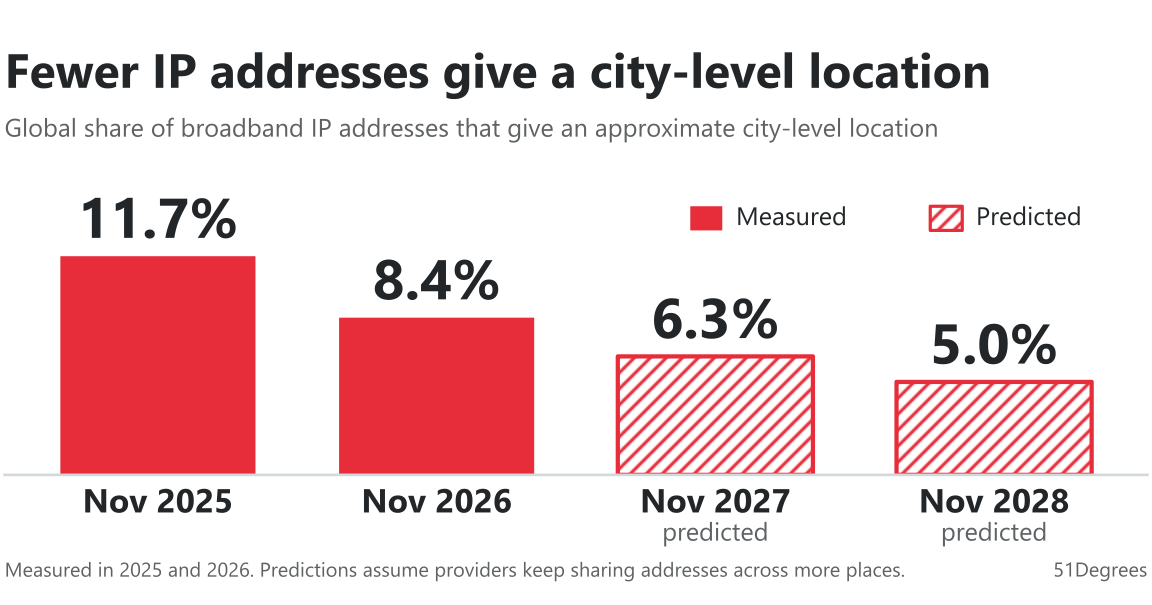
The classic application of an IP-derived location has been geotargeting of ads, maybe to a city-sized area to drive traffic to a store or venue. But in November 2026 only 8.4% of broadband IP addresses worldwide gave an approximate city-level location, down from 11.7% a year earlier. And we predict 6.3% by the same time next year.
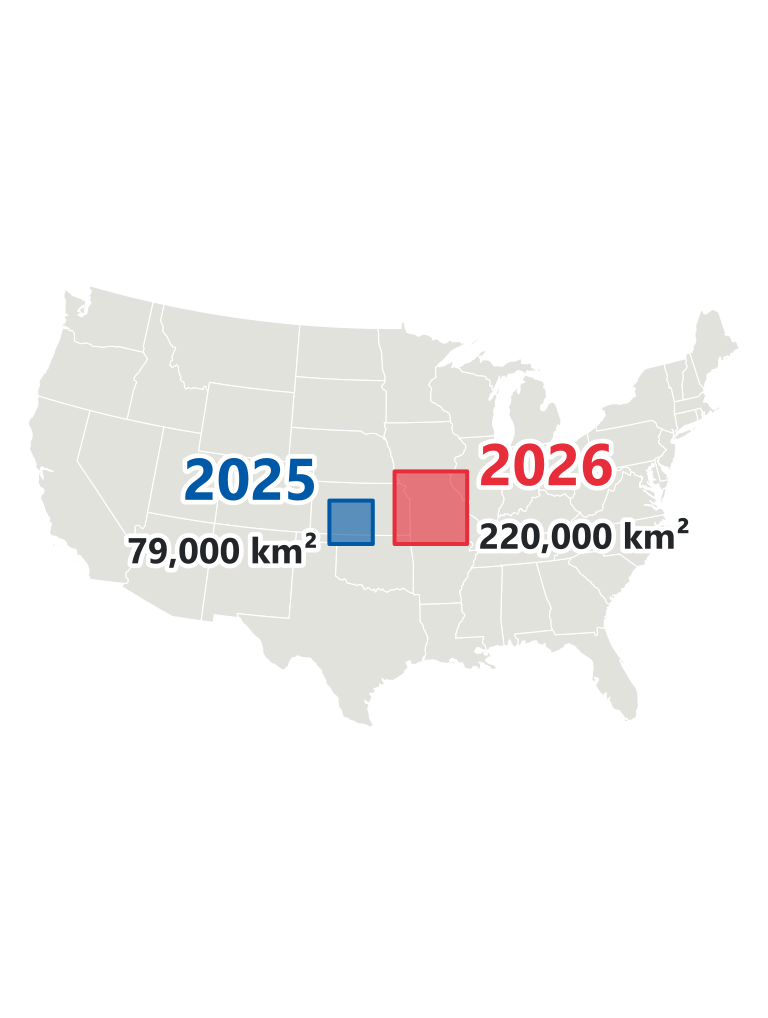
In Europe, most IP addresses now point to nearly the whole country, and in the US the typical IP points to an area of more than 300,000 km². The upshot is that IP location can no longer be relied upon to pinpoint a device's location.
There are still valuable applications for IP location in country-level targeting, location verification and fraud prevention, but the days of targeting ads to a city from the IP address alone are over.
To find out why, to see where IP location can still add value, and why you need the right vendor to make it work, download our report today.