
The 51Degrees state of IP geolocation report 2026
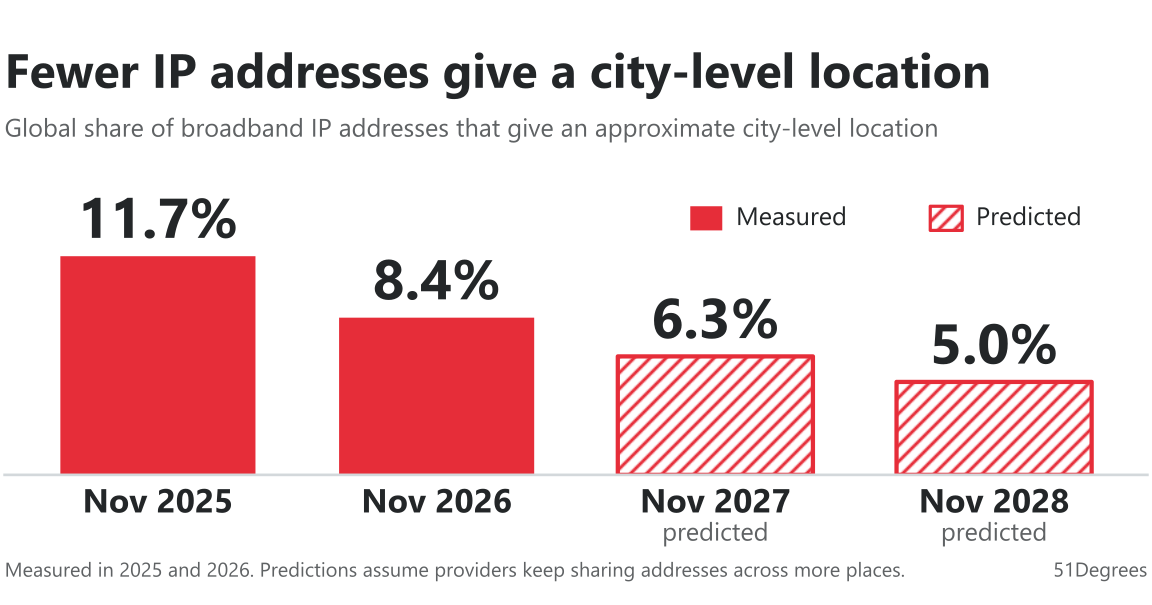
Only 8.4% of IP addresses give an approximate city-level location today. We predict 6.3% by November 2027.
About 51Degrees
We've supplied data about devices and networks since 2009. Our name comes from the latitude of Reading, England, where we're based, so location has been with us from the beginning. For each IP address we give the area the device is likely to be in, how confident we are in that area, and how varied the devices using the address are. We combine those with what we know about the device to tell you how likely a visitor is to be a real person, which we call Human Confidence.
What we found in 2026
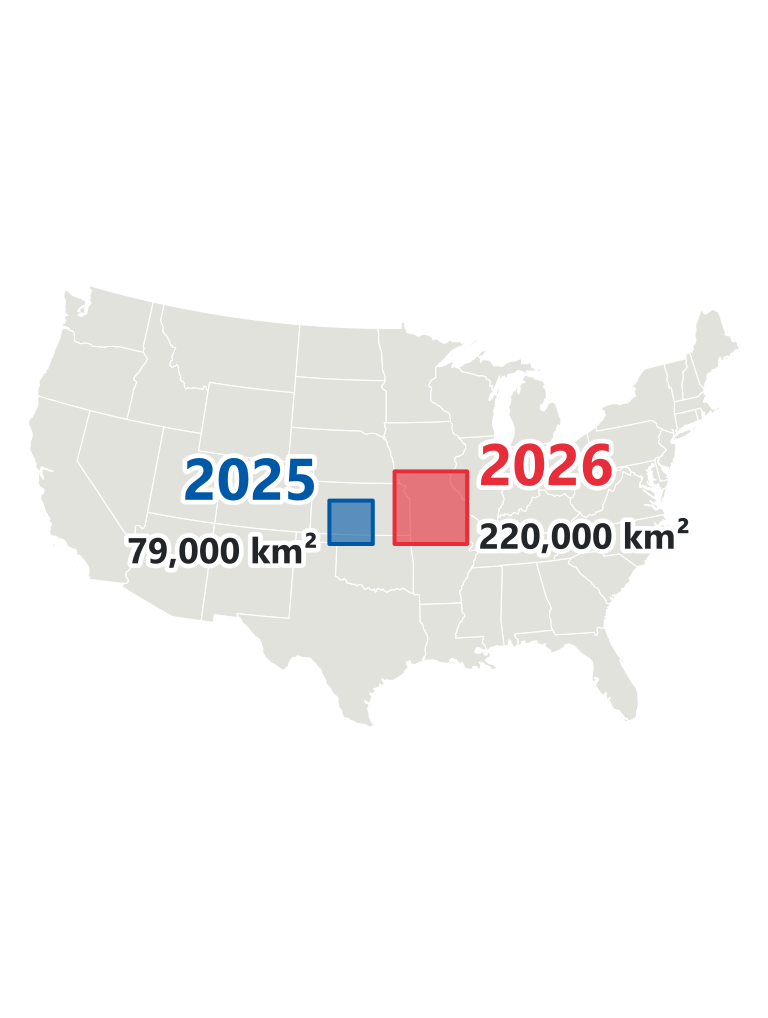
An IP address points to an area, not to a place. We measured that area for every usable broadband IPv4 address in November 2025 and again in November 2026. In 12 months the typical area grew 2.8 times, and far fewer addresses now point to an area the size of a city.
IP location still works for
Fraud checks. Spotting sign-ups, logins, and payments that don't fit.
Real people. Judging whether a visitor is a real person rather than automated traffic, with Human Confidence.
VPNs and proxies. Finding visits from data centers, VPNs, and proxies.
Checking a second signal. Comparing a location the device shares, such as GPS, with the IP address.
Geofencing to a country. Deciding which country a visitor is in.
It no longer works for
Advertising to a place. Targeting or counting an audience by town or city.
Geofencing below a country. Fencing by region, city, or postal code.
Telling people where they are. Naming a visitor's location from the IP address alone.
The full report has the figures for the United States and Europe, why the areas grew, how we made the predictions, and the method.